


WyrmWild: Monster Trail Global
4.2315.00 Reviews
App Specs
- Version
- 1.1.3
- Updated On
- License
- Free
- Downloads
- 50,000+
- Developer
- Maw3id موعد
- Categories
- Role Playing
- Platform
- Android
Screenshots
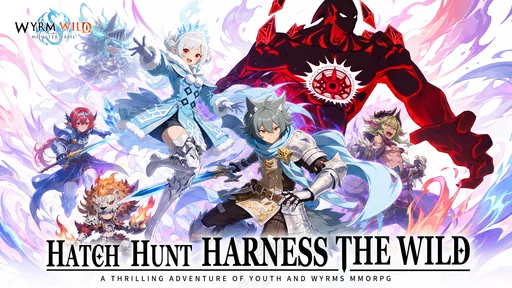
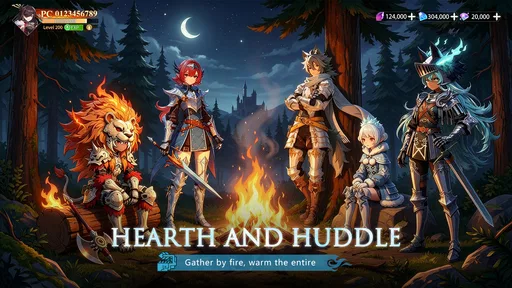
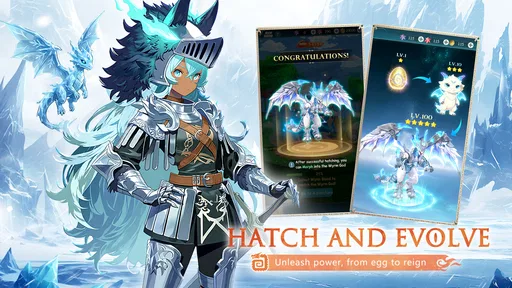

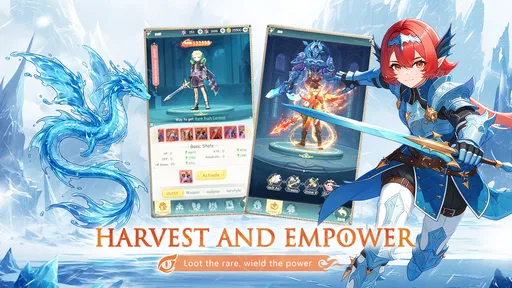
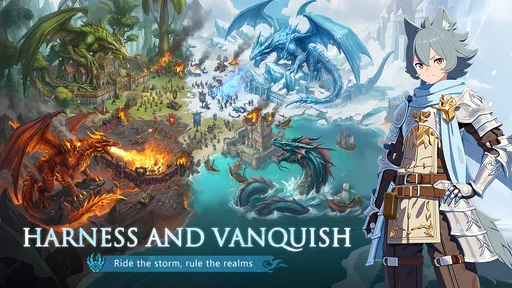
 Analysis by AppCompare
I approached WyrmWild: Monster Trail Global as a role-playing game with a simple promise on the surface: find creatures, raise them, and make sensible choices about how to use them. After spending time with it, I found that its appeal depends less on rushing through a checklist and more on how carefully I plan each outing. The game asks me to think about what I want from a creature, what I am willing to risk while hunting, and whether a short-term gain will help my longer-term progress.
That makes it a better fit for players who enjoy gradual improvement than for people looking for a quick, highly scripted adventure. The store summary uses the phrase “Hatch, Hunt, Harness the Wild,” and that captures the basic rhythm without explaining the decisions behind it. I am not simply collecting monsters for a display; I am constantly weighing which ones deserve attention, which resources should be saved, and when it is smarter to prepare rather than push forward.
How the trail turns collecting into a series of decisions
The strongest part of the experience is the way collecting becomes a planning exercise. A new creature is exciting, but the real question is what happens afterward. Do I invest in it immediately, keep it as a future option, or use it to support a more reliable group? That small pause before committing matters, because it prevents every discovery from feeling interchangeable.
I also like that the game’s role-playing structure gives the creatures a purpose beyond being decorative rewards. Even when I am tempted by something new, I have to consider whether it actually improves my current approach. A creature that looks promising may not be the right answer for the next challenge, while a less exciting one can be valuable because it fits the way I already play.
For a newcomer, my advice is to avoid treating every early reward as a permanent decision. Spend the opening sessions learning what kinds of creatures suit your habits. If you prefer cautious progress, concentrate on dependable choices. If you enjoy experimenting, keep room for unusual combinations instead of putting everything into the first team that seems effective.
This is also where WyrmWild differs from a basic collection game. The usual alternative in this category often encourages players to gather as many creatures as possible and let quantity carry the experience. Here, I found more value in asking what each addition changes. A growing roster is useful, but a deliberately shaped roster is easier to understand and manage.
Why preparation matters more than speed
My most useful habit was preparing before a longer session instead of entering the trail with a vague plan. I would decide whether the goal was discovery, improvement, or simply making progress. That choice affected how patient I was during encounters and whether I felt disappointed by a reward that did not immediately strengthen my main group.
Worth Reading Before You Choose

EA SPORTS FC Mobile 26 Is a Bigger Football Game, but It Takes Time

Flipboard Shows What News Apps Must Do Beyond the Feed

Switching to Android Auto Means Rethinking Your Driving Routine

Google Calendar Makes a Crowded Week Easier to Manage

Ludo King Makes the Most of the Minutes Between Plans

Baby Panda World Brings Quick Play to Modern Phones, but Its Game Library Feels Busy
This approach also makes the game easier to enjoy in short bursts. If I only have a few minutes, I can focus on one clear task rather than trying to complete everything. A short session spent organizing priorities can be just as useful as a session spent hunting, especially when I am close to an important upgrade or trying to build a more balanced set of creatures.
One practical tip is to keep a mental separation between “interesting” and “useful.” I often wanted to develop a creature simply because it was new, but that was not always the best use of my attention. Saving some effort for a creature that supports my current plan made later decisions less frustrating. It also reduced the feeling that progress depended on constantly replacing what I had already built.
Risk, reward, and the cost of chasing one more discovery
The hunting loop is most enjoyable when I treat it as a question of timing. Continuing can lead to something better, but it can also leave me with less flexibility for the next step. That tension gives ordinary progress a little more weight. I am not only asking whether I can continue; I am asking whether continuing is worth the position it may leave me in.
I would not describe the game as punishing for its own sake, but it does reward restraint. Players who always pursue the most attractive possibility may find themselves spreading their attention too thinly. Players who never take a chance can become overly conservative and miss the fun of discovering a better direction. The satisfying middle ground is to take calculated risks when the possible improvement justifies the preparation already made.
This is especially relevant for anyone wondering whether the game is suitable for casual play. I think it is, provided “casual” means short, thoughtful sessions rather than completely mindless tapping. The game can fit into an everyday routine, but it is more rewarding when I remember what I was trying to accomplish. For example, after work I might spend a brief session focusing on one creature’s development instead of opening the game with no goal and leaving after a few random actions.
The free price makes it easy to try, while optional purchases range from $0.49 to $99.99 per item. That broad range is important to keep in mind before starting. I recommend deciding in advance whether I am comfortable spending anything, because a collection-focused game can make new possibilities feel tempting even when I already have enough tools to continue. The best way to protect the experience is to treat purchases as optional conveniences, not as part of the basic plan.
For me, the trade-off is clear: spending may reduce waiting or make experimentation feel easier, but it can also remove some of the satisfaction that comes from solving a planning problem with the resources already available. Players who enjoy earning progress gradually should be comfortable staying free-to-play. Those who dislike any pressure around optional purchases should approach with a firm personal limit or choose a different role-playing game built around a single upfront payment.
Adapting when the first plan stops working
A good creature-raising game should make adaptation feel worthwhile, and that is where I found the most useful depth. My first plan was not always the best one. Sometimes I had invested in a creature because it seemed promising, only to realize that my wider group lacked balance. The answer was not necessarily to discard everything; it was to identify the weak link and adjust one part at a time.
That gradual approach is less stressful than rebuilding from scratch. I could preserve what was working while testing a different direction. It also encouraged me to look beyond individual strength. A creature’s value depends on the role it fills and the choices surrounding it, not only on how impressive it appears by itself.
One non-obvious lesson is that keeping a reserve of attention can be as important as keeping a reserve of resources. If I commit all my development effort to one favorite creature, I may have fewer answers when a different challenge exposes a weakness. Dividing attention carefully gives me more options, although it slows the improvement of any single choice. That is a genuine trade-off rather than a universal rule.
I would recommend experimenting early, before habits become expensive to change. Try a few different approaches and notice which one matches your preferred pace. If you enjoy making a focused team, specialization may feel satisfying. If you prefer flexibility, a broader roster may be worth the slower individual progress. Neither style is automatically correct; the important thing is recognizing what you are building before you spend heavily on it.
Compared with more linear role-playing games, this gives WyrmWild a more personal sense of progress. In a linear adventure, the next upgrade is often obvious and the story tells me why I should want it. Here, I have more responsibility for deciding what “better” means. That freedom is appealing, but it also means players who want constant direction may occasionally feel unsure about their next priority.
What remains interesting after the first sessions
The game’s long-term appeal comes from refining decisions rather than merely repeating actions. At first, I was mainly learning the rhythm of hatching and hunting. Later, I paid more attention to how each choice affected the next few sessions. That shift from reaction to planning is what kept the experience from feeling like a one-time novelty.
There is a useful planning horizon here. A short-term goal might be improving one creature. A medium-term goal might be shaping a group that handles more situations comfortably. A longer-term goal is deciding what kind of collector or strategist I want to be. Thinking on all three levels makes the game feel more coherent, because a small action has a reason beyond immediate progress.
I found it helpful to review my roster before making another major commitment. Rather than asking only which creature is strongest, I would ask which one gives me a missing option, which one is receiving attention without returning much value, and which one I still want to test before judging. This simple review prevents impulse choices and is one of the easiest ways to make the experience feel deeper without turning it into homework.
Another useful habit is to accept that not every session needs a visible breakthrough. Some sessions are for learning, organizing, or preparing. If I judge the game only by how many new creatures I obtain, slower sessions feel disappointing. If I judge them by whether they improve my next decision, even a quiet session can be productive.
The current version is 1.1.3, and the game is available on Android devices running at least Android 9. The technical entry point is therefore fairly approachable for many players, but device compatibility is still something I would check before committing time. The age rating is Teen, so parents should consider that classification rather than assuming the collection theme makes it suitable for every child.
The game comes from Maw3id موعد, and its audience appears to be players who enjoy a creature-focused role-playing loop more than a purely narrative campaign. I would not choose it as my first recommendation for someone who wants a deep story, elaborate dialogue, or a traditional party-based adventure. I would choose it for someone who likes building a collection, comparing possibilities, and making progress through repeated small decisions.
Who will enjoy the slower strategic rhythm
I think the best audience is a player who likes to plan but does not need every system explained through a long tutorial. You should enjoy WyrmWild if the idea of finding a creature is only the beginning of the decision. The rewarding part is deciding whether to develop it, where it belongs, and how it changes the rest of your approach.
It also works well for players who want a flexible mobile game that can be opened for a focused task. A realistic routine might be checking the current group during a commute, deciding which creature deserves attention, and saving the next hunt for a time when you can concentrate. That separation between preparation and action makes the game easier to fit around daily life than a long, uninterrupted role-playing session.
I would be more cautious about recommending it to players who dislike collection mechanics, optional purchases, or repeated improvement loops. If you want a game where every minute delivers a dramatic event, the measured pace may feel slow. If you prefer a completely predictable progression path, the need to make your own priorities may feel like extra work rather than freedom.
Players comparing it with a conventional monster-collecting alternative should focus on the kind of satisfaction they want. A story-led game is usually better when narrative momentum and fixed objectives matter most. A competitive game may be better when direct player-versus-player tension is the main attraction. WyrmWild is more suitable when the pleasure comes from shaping a personal collection and learning how to manage its weaknesses over time.
The biggest limitation, in my experience, is that the same flexibility that creates depth can make the game feel less urgent. Without a clear personal goal, hunting and development can blur together. I solved that by setting small targets before playing, but not everyone will want to supply that structure themselves. This is a game that benefits from an engaged player, not one that constantly pulls a passive player forward.
My strategy verdict after weighing the trade-offs
My final view is positive, but it is deliberately specific. WyrmWild is not compelling because it promises an enormous checklist; it is compelling when I slow down enough to make each creature serve a purpose. The best moments come from turning a weak position into a workable plan, taking a measured risk, and seeing a collection become more coherent rather than merely larger.
The average rating of 4.3 from around 1.8 thousand ratings suggests that the game has found an audience, while more than 50 thousand installs show that it has reached a meaningful group of mobile players. Those figures are useful context, but they do not change my main advice: try it if you enjoy deliberate creature management, and skip it if you need a strongly guided adventure or dislike free-to-play decision pressure.
I would start without spending, learn the hunting rhythm, and set a clear first objective. Give yourself time to test different development choices before deciding which creatures deserve long-term attention. Keep some flexibility, avoid putting every resource into the first favorite, and treat interesting discoveries as opportunities to evaluate rather than automatic upgrades.
For me, that is the difference between a shallow collection loop and a role-playing game with staying power. Its real strength is the decision space between discovery and commitment. When I plan around that space, the trail feels rewarding and personal. When I rush through it, the game loses much of its character. I recommend it to thoughtful collectors and patient mobile RPG players, with the clear warning that its best qualities appear only when I am willing to make my own strategy.
Pros
- Monster-collecting gameplay is easy to learn and enjoyable for casual players.
- Global trail setting gives exploration a distinctive atmosphere.
- Short play sessions fit well into daily routines.
- A broad creature roster encourages experimentation with team setups.
- Regular progression provides clear goals beyond individual battles.
Cons
- Some features may require grinding before progress feels rewarding.
- The global theme may feel less developed than the monster roster.
- Limited information can make advanced team-building confusing.
- Performance may vary on older phones during busier scenes.
- Frequent notifications could become distracting for some players.
FAQs for WyrmWild: Monster Trail Global
What is WyrmWild: Monster Trail Global?
WyrmWild: Monster Trail Global is a monster-collecting adventure game in which players explore a fantasy world, encounter unusual creatures, build a team, and take part in battles and progression activities. Its main appeal comes from discovering new monsters, improving their abilities, and developing a stronger collection over time. Before downloading, remember that the available content and features may vary by region, device, and game updates.
How does the gameplay work in WyrmWild: Monster Trail Global?
The game combines exploration, monster collection, team management, and combat. You generally travel through different areas, meet creatures, and use the monsters in your team to overcome challenges. Progress depends on choosing suitable companions, upgrading them, and learning how different abilities work together. New players should expect a gradual progression system rather than a single short campaign, with repeated activities helping strengthen their roster.
Is WyrmWild: Monster Trail Global free to download and play?
WyrmWild: Monster Trail Global can be downloaded without an upfront purchase where it is officially available, but players should check the store listing for the current pricing and regional details. Like many mobile games, it may include optional in-app purchases for resources, progression items, or other content. These purchases are not necessarily required to begin playing, although they may affect how quickly some upgrades or rewards are obtained.
Does WyrmWild: Monster Trail Global require an internet connection?
An internet connection may be needed for downloading game data, signing in, synchronizing progress, receiving updates, and accessing online features. Even if certain parts of the game appear playable offline, full functionality should not be assumed without checking the latest developer information. A stable connection is especially important when entering events, claiming online rewards, or completing activities that depend on server communication.
What devices are compatible with WyrmWild: Monster Trail Global?
Compatibility depends on the operating system, device model, available storage, and the minimum requirements specified on the official Google Play or App Store listing. Because monster games can require considerable resources for graphics, animations, and downloaded data, older phones may experience slower performance, longer loading times, or limited support. Check the store page before installing and make sure enough free space is available for future updates.


